10 Best Outdoor Light Poles for Global Buyers
Choosing the right outdoor lighting pole is rarely about appearance alone. Global buyers must consider wind exposure, corrosion, installation methods, power access, and local safety requirements. This guide, “10 Best Outdoor Light Poles for Global Buyers,” examines practical options for streets, gardens, pathways, resorts, campuses, and commercial sites.
Each selection should be judged by material quality, pole height, base design, finish durability, and compatibility with modern LED fixtures. Galvanized steel can suit demanding public areas, while aluminum offers lighter handling and strong corrosion resistance near coastal locations. Powder-coated finishes may improve appearance, but surface preparation still matters. Poor preparation can shorten service life.
Small details matter.
We also consider shipping dimensions, assembly requirements, maintenance access, and supplier communication. A pole that looks economical may require special foundations, extra hardware, or costly replacement parts. Buyers should request technical drawings, load information, warranty terms, and installation guidance before placing an international order. Regional weather data and electrical codes must be checked by qualified professionals.
The phrase Light Poles Outdoor covers many product types, not one universal solution. Some models perform well in landscaped areas but feel unsuitable for heavy traffic zones. Others offer strong value but need better documentation. This review aims to provide reliable comparisons, while recognizing an important limitation: product performance depends on installation quality and site conditions. No ranking fits every market. Careful verification remains essential.
What Outdoor Light Poles Are and How They Are Used
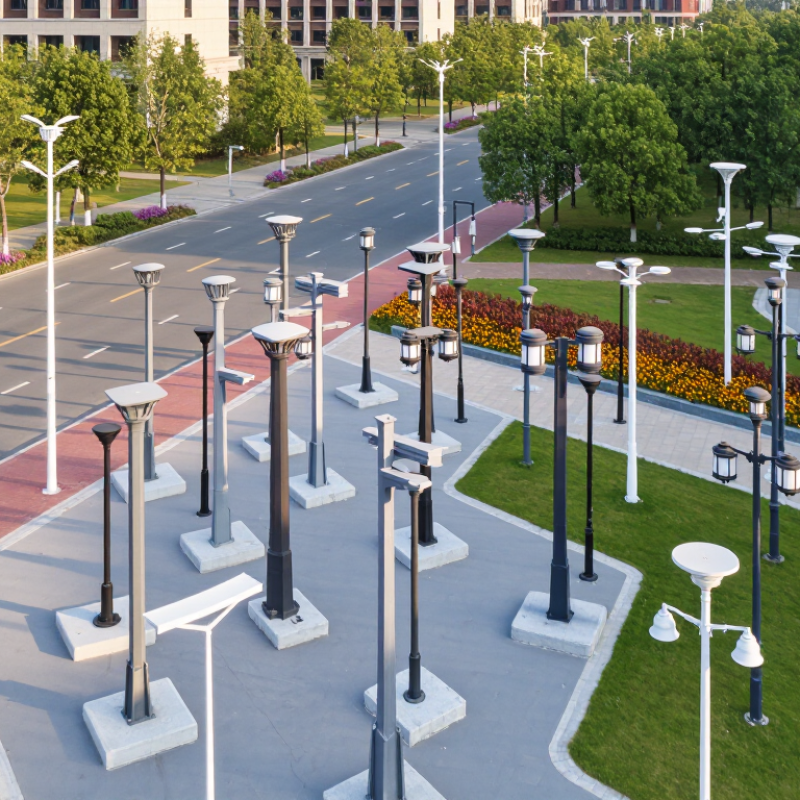
Outdoor light poles are vertical structures that position luminaires above roads, pathways, parking areas, parks, and building entrances. They usually include a steel, aluminum, or concrete shaft, a base plate, anchor bolts, wiring access, and a mounting arm. Their height controls light distribution, while the foundation resists wind, vibration, and vehicle movement.
The International Energy Agency reported in Energy Efficiency 2023 that lighting uses about 15% of global electricity. Efficient outdoor poles can support lower energy use when paired with suitable LED luminaires, controls, and accurate spacing. However, a taller pole is not automatically better. Poor height, glare, or uneven spacing can create dark patches and uncomfortable brightness. In coastal locations, salt exposure makes corrosion protection especially important. In windy regions, buyers should review wind-load calculations, pole deflection, and foundation requirements. One practical lesson remains easy to miss: the pole and luminaire must be designed as one system.
Tips: Check the local wind standard, soil report, coating specification, cable entry, and maintenance access before ordering. Request structural calculations, material certificates, and installation drawings. Measure the real site, not only the map.
The U.S. Department of Energy notes that LED systems can deliver substantial efficiency gains, but results depend on optics, controls, operating schedules, and maintenance. Buyers should compare delivered light, service life, ingress protection, and replacement access. I would also question optimistic service-life claims. Dust, heat, moisture, and poor installation can shorten actual performance. Shorter poles may sometimes provide better visual comfort and easier maintenance.
Outdoor Light Poles: Typical Heights by Application
Outdoor light poles are vertical structures used to mount luminaires for roads, parking areas, pathways, sports facilities, and public spaces. Typical pole heights range from approximately 4 to 18 meters, with higher poles generally selected to cover wider areas and reduce the number of fixtures required. Final sizing depends on lighting standards, wind conditions, spacing, foundation design, and the required illuminance level.
Outdoor Light Pole Types, Materials, and Design Features
Choosing among the 10 best outdoor light poles starts with the site, not the catalog. A straight steel pole suits roads and parking areas where strength and economical installation matter. A tapered steel pole can reduce visual bulk while handling wind loads efficiently. Aluminum poles are lighter and resist corrosion, especially near humid coastlines. Galvanized steel offers a practical protective layer, but damaged coatings need inspection. Stainless steel looks refined and performs well in harsh environments. Concrete poles provide mass and durability, although transport and foundation work can be demanding. Fiberglass poles resist corrosion and simplify handling, but impact performance deserves careful checking.
The remaining options include decorative poles, solar-ready poles, and smart-ready poles. Decorative profiles improve streetscapes, yet ornate details can collect dust and moisture. Solar-ready designs need a stable top, concealed wiring, and space for batteries or controllers. Smart-ready poles may include sensor mounts, access panels, and spare cable capacity. Base plates, anchor bolts, handholes, and foundation dimensions affect installation more than many buyers expect. Choose a powder-coated or galvanized finish only after checking climate, cleaning needs, and repair access. A dark finish can look elegant, but it may show scratches sooner.
Good design also controls glare. Use shielded optics, suitable mounting heights, and spacing verified by a lighting calculation. Round shafts are easy to specify, while octagonal or fluted shafts can add stiffness and character. Check door locks, cable routes, drainage, and lifting points before approving drawings. I have seen attractive poles fail practical reviews because the handhole was too small. That detail is easy to miss. Buyers should compare wind data, corrosion exposure, warranty terms, replacement parts, and local installation capability. The “best” pole is not always the strongest one. It is the one that remains safe, serviceable, and visually appropriate for its actual site.
Key Safety, Lighting, and Regional Compliance Standards
Outdoor light poles must satisfy more than height and appearance. A safe selection starts with structural design, electrical protection, and local approval requirements. Check wind-load calculations for the installation site, including pole height, fixture weight, and projected area. Coastal projects need corrosion-resistant finishes and sealed connections. Grounding hardware should remain accessible for inspection.
The lighting assembly should match relevant standards, such as IEC 60598-2-3 for road and public-area luminaires. IEC 60529 ratings help confirm protection against dust and water; an IP65 rating is common for exposed equipment. IK impact ratings may matter in parks, streets, and transport areas. Use surge protection where lightning or unstable grids create additional risk. Details matter.
Regional compliance can change the purchasing decision. European projects may require CE marking, EN 40 structural guidance, and applicable energy rules. UK installations may need UKCA requirements. North American buyers often review UL or CSA certification, NEC grounding practices, and local utility rules. Other markets may require national testing, language-specific labels, or import documentation. Do not treat one certificate as global approval. A checklist can still miss local wind data or buried-cable requirements. Measure twice. Verify with an independent engineer, accredited laboratory, or municipal authority before installation. Safety is practical, not decorative.
The 10 Best Outdoor Light Poles for Different Applications
Outdoor light poles perform differently across real sites. A residential driveway usually needs a short decorative pole with shielded light, reducing glare into bedroom windows. Garden paths benefit from low bollard-style poles, spaced evenly for safer walking. Parking lots require taller galvanized steel poles with wide photometric distribution, strong foundations, and easy access for maintenance. Roadways need carefully calculated poles that support uniform illumination without creating harsh bright spots.
Sports fields demand high-mast poles with precise floodlight aiming and minimal spill toward nearby homes. Commercial entrances often use durable aluminum poles with attractive proportions and reliable dusk-to-dawn controls. Coastal properties need corrosion-resistant finishes because salt air attacks exposed hardware quickly. Remote paths may suit solar-powered poles, although battery performance can fall during cloudy seasons. Construction areas need temporary, impact-resistant poles with stable bases and protected wiring. Public squares or heritage districts may require custom-shaped poles that match local architecture while meeting modern structural standards.
Pole height is only one factor. Wind load, soil conditions, cable routing, light color, and maintenance access matter just as much. A taller pole is not always better. It can increase glare and complicate repairs. I have seen layouts that looked balanced on paper but left dark gaps beside trees. Site testing helps reveal those flaws. Measure at night, check pedestrian sightlines, and review seasonal landscaping before final installation. Reliable suppliers should provide structural data, corrosion ratings, installation guidance, and replacement-part information. Small details matter.
How Global Buyers Can Select, Install, and Maintain Light Poles
Global buyers should treat a light pole as a structural system, not a decorative tube. Start with mounting height, luminaire weight, outreach length, wind exposure, and local soil conditions. A coastal site needs durable finishes and sealed connection details. A rural road may need greater reach and easier access for maintenance. Ask for material certificates, load calculations, dimensional drawings, and a clear inspection plan. Do not compare price alone. It hides replacement costs.
Before ordering, confirm the foundation design with a qualified local engineer. Anchor-bolt spacing must match the base plate precisely. Check underground utilities before excavation, then keep the foundation level while concrete cures. Use lifting equipment rated for the pole’s weight. Install gaskets, grounding components, and cable entries carefully. Small gaps invite water. After energizing, inspect alignment at night and during daytime. Light spill may appear acceptable on paper but uncomfortable in practice. This is where many plans need revision.
Create a maintenance schedule based on climate, traffic, and access conditions. Inspect bolts, welds, coatings, doors, hinges, and cable insulation. Remove salt deposits before corrosion spreads. Recheck vertical alignment after storms or ground movement. Record torque readings and repair dates in a simple log. LED units can last years, but drivers and seals still fail. The installation is not finished at handover. A useful lesson is to leave space for tools and future wiring. We often underestimate that detail. Buyers should request spare access hardware and readable labels. These modest steps make international supply, installation, and service more dependable.