China’s Top 10 Best Quality Windows for Home in 2026? This question deserves more than a glossy product list. A strong window must control heat, cold, air leakage, noise, moisture, and long-term maintenance. The best quality windows for home should also match China’s varied climates, from humid Guangzhou to freezing Harbin.
The U.S. Department of Energy reports that windows can account for 25% to 30% of residential heating and cooling energy use. ENERGY STAR’s Version 7.0 criteria also emphasize lower U-factors, suitable solar heat gain coefficients, and improved product performance. These figures do not automatically identify the best Chinese brands. They provide a useful technical starting point.
Building scientist Joseph Lstiburek offers a blunt reminder: “Windows are not walls.” That short sentence matters. A window interrupts insulation, airtightness, and weather protection. This ranking therefore examines frame materials, low-E glass, thermal breaks, hardware, air leakage, drainage, warranties, and installation support. NFRC-style performance labels can help, but Chinese testing standards and regional requirements must also be checked carefully.
Some premium windows look impressive in a showroom. Poor installation can still produce a cold edge, water stains, or street noise. That is the uncomfortable part. Product quality is only half the result. Homeowners should compare certified test data, installer experience, replacement-part access, and real project feedback before choosing. The following ten candidates offer a practical comparison, not an unquestionable verdict.
China’s 2026 top ten home windows should be ranked by measured performance, not appearance or advertising claims. U-factor indicates heat transfer; lower values generally improve insulation. SHGC shows how much solar heat enters through the glass. Air leakage measures unwanted drafts, often reported in cubic feet per minute per square foot.
The U.S. Department of Energy reports that windows can influence roughly 25% to 30% of residential heating and cooling energy use. That makes these figures practical, not decorative. The National Fenestration Rating Council recommends comparing certified labels under consistent laboratory conditions. For a strong 2026 shortlist, I would favor windows near or below U-factor 0.27, SHGC between 0.25 and 0.40, and air leakage near 0.10 cfm/ft² or lower. Climate still matters. A sunny southern room may need lower SHGC, while a cold northern room may benefit from moderate solar gain.
Installation changes the result. A carefully rated window can leak around a poorly sealed frame. Lawrence Berkeley National Laboratory’s window research also shows that orientation, shading, and glazing affect real energy savings. My ranking would therefore reward balanced performance, not one impressive number. It is an imperfect method. U-factor comparisons may use different test conditions, and published data cannot fully predict a humid coastal apartment or a dusty inland house. Buyers should request certified test reports, installation details, and air-leakage results before choosing from China’s 2026 top ten.
Comparison by U-Factor, Solar Heat Gain Coefficient (SHGC), and Air Leakage. Lower U-Factor and air leakage indicate better insulation and airtightness; SHGC should be selected according to local climate and solar exposure.
Values are representative 2026 performance figures for high-quality residential window configurations commonly specified for the Chinese market. U-Factor is expressed in W/m²·K; SHGC is dimensionless; air leakage is L/s·m² at 75 Pa.
In 2026, quality windows should be judged by measured performance, not appearance alone. GB/T 8478-2020 provides China’s framework for building windows and doors, including thermal, airtightness, watertightness, and wind-resistance requirements. ISO 10077 supports thermal-transmittance calculations for frames, glazing, spacers, and junctions.
Look beyond the glass.
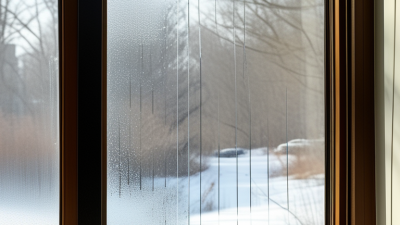
The IEA’s Buildings 2023 report states that buildings consume about 30% of global final energy. They also produce roughly 26% of energy-related emissions. A poorly installed window can weaken an otherwise efficient wall. On a cold morning, condensation around the frame may reveal thermal bridges or excessive indoor humidity. Solar-factor data also matters. In southern China, excessive solar gain can increase cooling loads, even when the U-value looks impressive.
Confirm the declared U-value under comparable boundary conditions. Ask whether tests cover the complete window, not glazing alone. Check air leakage around corners, drainage paths, and opening hardware.
I have seen attractive units perform poorly after careless installation. That detail is often underestimated. Standards improve decisions, but site workmanship still deserves more scrutiny.
China’s best home windows in 2026 should match local climate and façade orientation, not just appearance. In cold northern provinces, low-E double-glazed casement windows reduce heat loss, while triple-glazed units suit severe winters and windy sites. Thermally broken aluminum frames also limit cold bridges around the opening.
In hot-summer, cold-winter regions, tilt-turn windows offer controlled ventilation during humid spring evenings. South-facing rooms benefit from low-E glass with moderate solar control. East and west façades need stronger shading because low-angle morning and afternoon sun enters deeply. Sliding windows save space, but their seals often perform less effectively than casements. Small awning windows can release warm air during rain.
In southern coastal areas, louvered windows support airflow, although they need careful rain protection. Fixed windows provide excellent airtightness for quiet views, especially on shaded north façades. Bay windows add daylight, but their larger glass area can increase summer heat. Skylights work well in dark stairwells, yet require strict waterproof detailing. High-altitude western homes may need insulated glazing with durable gaskets and protection from intense sunlight. In practice, I have seen attractive windows fail because installers ignored drainage and frame alignment. There is no universal “best” type. Local testing, orientation checks, and professional installation matter more than a impressive specification.
A practical comparison of high-performance residential window configurations for China's main climate zones and common building orientations.
| Rank | Window type | Suitable Chinese climate zone | Preferred orientation | Recommended glazing | Frame and installation features | Target whole-window Uw (W/m²·K) |
Solar-control strategy | Best-use rationale |
|---|---|---|---|---|---|---|---|---|
| 1 | Triple low-e tilt-and-turn window | Severe cold Harbin, Changchun and similar areas |
South; limited north exposure | Triple insulating glass; two low-e coatings; argon-filled cavities; warm-edge spacer; 40–52 mm overall glass thickness | Thermally broken aluminum or high-quality uPVC frame; multi-point compression hardware; insulated perimeter installation | 0.8–1.2 | Moderate SHGC on south façades for useful winter solar gain; lower SHGC on east, west and north façades | Excellent heat retention, airtightness and resistance to interior-surface condensation during long, cold winters |
| 2 | Triple low-e inward-opening casement window | Cold Beijing, Shenyang and northern inland areas |
South and southeast | Triple low-e insulating glass with argon filling and warm-edge spacer; centre-of-glass Ug commonly about 0.5–0.8 W/m²·K | Thermally broken frame; continuous gaskets; four-sided compression seal; properly insulated reveal and sill | 1.0–1.5 | Use medium-to-high SHGC on well-shaded south windows; use solar-control low-e glass where summer overheating occurs | Balances winter insulation with controlled ventilation and good air sealing for large seasonal temperature changes |
| 3 | Thermally broken aluminum double low-e casement window | Hot summer–cold winter Shanghai, Nanjing, Wuhan and surrounding regions |
South and north; shaded east or west | Double low-e insulating glass; argon-filled cavity; warm-edge spacer; optional laminated inner pane for acoustic comfort | Deep polyamide thermal break; multi-point locking; low-conductivity setting blocks; airtight frame-to-wall joint | 1.6–2.2 | Medium or low SHGC on east and west; adjustable external shading is strongly recommended for south-facing glass | Provides year-round performance where both winter heating and summer cooling are significant |
| 4 | Low-e uPVC multi-chamber casement window | Cold Cold northern cities and elevated inland locations |
South and southeast | Double or triple low-e insulating glass; argon filling; warm-edge spacer; optional acoustic laminate near major roads | Multi-chamber uPVC profile with reinforced core; compression seals; steel-free or thermally optimized reinforcement where structurally suitable | 1.1–1.8 | Allow useful winter solar gain on south façades; add blinds or external shading for summer afternoons | Low frame conductivity and effective air sealing make it suitable for heating-dominated homes |
| 5 | Double low-e thermally broken aluminum sliding window | Hot summer–warm winter Guangzhou, Shenzhen, Haikou and southern coastal areas |
North; shaded south; carefully protected east or west | Double solar-control low-e insulating glass; argon filling; laminated pane may be used for noise reduction and safety | Thermally improved sliding frame; interlocking meeting stiles; drained sill; brush seals supplemented by compression seals where possible | 1.8–2.6 | Low SHGC, particularly on west and southwest façades; combine with external louvers, balconies or overhangs | Offers convenient ventilation and space-saving operation while limiting solar heat gain in cooling-dominated climates |
| 6 | Low-e casement window with acoustic laminated glass | All zones Urban homes near traffic or rail corridors |
Street-facing façades; east and west where noise is present | Asymmetric double glazing, such as 6–12– laminated glass; low-e coating on the appropriate surface; sealed air or argon cavity | Fully compressive opening seal; rigid frame; perimeter backer rod and sealant; installation gaps kept consistent | 1.6–2.6 | Choose SHGC according to façade exposure; external shading remains more effective than internal curtains | Improves sound insulation while retaining thermal efficiency; actual acoustic results depend heavily on installation and ventilation openings |
| 7 | Fiberglass or composite-frame low-e window | Cold to hot summer–cold winter Regions with large annual temperature swings |
South and southeast; all orientations with suitable glass | Double or triple low-e insulating glass; argon filling; warm-edge spacer; optional solar-control coating | Low-conductivity composite frame; stable sash; corrosion-resistant hardware; drained and insulated installation joint | 1.1–1.9 | Medium SHGC for balanced façades; lower SHGC for unshaded west-facing windows | Combines low frame conductivity with good dimensional stability across changing temperatures |
| 8 | Top-hung awning window with low-e glazing | Hot summer–warm winter Humid southern and coastal regions |
North or shaded façades; high-level openings | Double low-e insulating glass; argon filling; laminated option for safety; moisture-resistant warm-edge spacer | Top-hung compression seal; corrosion-resistant hardware; sloped external sill; insect screen designed to preserve airflow | 1.8–2.5 | Low-to-medium SHGC; use deep overhangs or horizontal shading on south-facing openings | Can provide controlled ventilation during light rain while reducing unwanted air leakage when closed |
| 9 | Tilt-and-slide panoramic window system | Cold to temperate Large-view residential spaces and balconies |
South or southeast; avoid unshaded west | Large-format double or triple low-e insulating glass; tempered or laminated safety glass; argon filling where available | Thermally broken frame; load-rated rollers; multi-point locking; reinforced structural opening; careful sill drainage and air sealing | 1.2–2.0 | Use low-e solar-control glass and external shading to reduce summer overheating from large glazed areas | Suitable for wide openings when daylight and views are priorities, provided thermal bridges and installation loads are controlled |
| 10 | High-performance fixed picture window | All zones Non-ventilating daylight openings |
North for diffuse light; south with shading | Double or triple low-e insulating glass; argon filling; laminated or tempered safety glass according to location and size | Thermally improved fixed frame; continuous perimeter seal; insulated structural joint; separate operable ventilator required for fresh air | 0.8–1.8 | Use low SHGC on unshaded east and west façades; use moderate SHGC on shaded south façades | Usually achieves the best airtightness and thermal performance because it has no opening sash or operating hardware |
For China’s 2026 home window market, frame and glazing quality deserve more attention than appearance. A thermal-break frame separates interior and exterior aluminum with low-conductivity polyamide. This reduces heat transfer through the frame. The U.S. Department of Energy reports that windows can cause 25–30% of residential heating and cooling energy use. Poor frame insulation can also create cold interior edges and condensation.
Glazing performance depends on more than glass thickness. Low-E coatings reflect infrared heat while allowing useful daylight inside. In winter, they help retain warmth. In summer, solar-control Low-E can reduce unwanted heat gain. A double-glazed IGU contains two glass panes and a sealed cavity, usually filled with argon. The National Fenestration Rating Council evaluates U-factor, solar heat gain coefficient, visible transmittance, and air leakage. These ratings are more useful than vague claims such as “energy saving.”
A durable IGU needs a reliable spacer, sound edge sealing, and clean gas filling. Field inspections often find failed seals before visible glass damage appears. Fogging between panes is a warning sign. It should not be ignored. ENERGY STAR guidance indicates that replacing single-pane windows can reduce household energy use by roughly 12–33%, depending on climate and product selection. However, a strong specification cannot rescue poor installation. Check corner joints, drainage paths, frame alignment, and perimeter sealing. I would also question unusually low prices, because the missing detail may be inside the spacer or factory testing process.
Quality verification should begin with documents, not attractive showroom samples. An NFRC label shows tested thermal performance, including U-factor, solar heat gain coefficient, visible transmittance, and air leakage. Lower U-factor usually means better insulation. However, ratings must match the exact frame, glass, spacer, and configuration. A small specification change can alter results. Check it carefully.
CE marking confirms conformity with applicable European requirements, but it is not a universal quality award. Request the Declaration of Performance and identify the testing standard used.
Reliable suppliers should provide reports for air leakage, water penetration, wind resistance, and structural loading. Ask whether tests covered the complete window assembly. Glass alone is not enough. Installation affects real performance.
Warranty wording deserves equal attention. Review coverage periods, seal failure terms, hardware exclusions, labor costs, and claims procedures. A long warranty may still offer weak protection if exclusions are broad.
Keep invoices, drawings, and installation records. Inspect sample corners, drainage holes, seals, locking points, and frame welds before ordering. The best window can perform poorly when installed carelessly. This is easy to underestimate.
My own checklist would still leave room for doubt, because laboratory figures cannot fully predict every coastal climate, dusty site, or uneven wall opening.